Book Appointment Now
Essential Tests and Scans During Pregnancy
- On
- InUncategorized
Tests and scans during pregnancy help doctors check the mother’s health, track the baby’s growth, and catch problems early. In the first visit and through each trimester, these checks give useful clues about blood count, infections, blood sugar, baby’s development, and pregnancy safety. At Aditri Clinics, Somajiguda, Dr. Shalini B guides mothers through this process with focused pregnancy care and a women-only care setting. If you are searching for the Best Gyenocolgist in Somajiguda, Hyderabad, this kind of early guidance matters from the start.
Pregnancy care works best when it follows a clear schedule. Some tests use blood or urine, while scans use sound waves to see how the baby is developing. The right timing matters because different tests answer different questions at different stages of pregnancy.
Tests and scans during pregnancy: what happens at the first visit
1) Basic blood tests
Early pregnancy usually starts with a prenatal panel or routine prenatal blood work. These tests can check for blood type, Rh factor, anemia, rubella immunity, and infections that may affect the mother or baby. Blood and urine tests give the doctor a strong starting point for pregnancy care.
2) Urine test and blood pressure check
Prenatal visits often include blood pressure checks, urine tests, and weight tracking. These help the doctor watch for swelling, protein in urine, and other early signs that need attention. These simple checks are a basic part of safe prenatal care.
3) Early pregnancy confirmation and dating scan
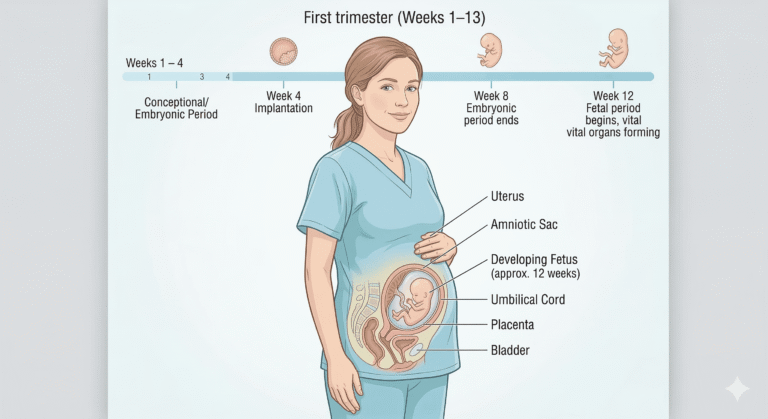
An early ultrasound, often called a dating scan, helps confirm the pregnancy and estimate how far along it is. NHS guidance says the scan is commonly offered around 10 to 14 weeks, and it can also help check early development. Ultrasound scans are painless and use sound waves.
This is one of the most important tests and scans during pregnancy because it helps set the pregnancy timeline correctly. At Aditri Clinics, Somajiguda, Dr. Shalini B often uses this stage to explain the next steps clearly, especially for mothers who want calm and structured pregnancy care.
Tests and scans during pregnancy: key scans by trimester
1) First trimester scan and screening
In the first trimester, doctors may offer a scan between about 11 and 14 weeks. Some systems also use this time for screening tests that estimate the chance of chromosomal conditions such as Down syndrome, Edwards syndrome, and Patau syndrome. A single screening approach is usually chosen rather than multiple overlapping ones.
This is why tests and scans during pregnancy are not just routine. They help the doctor make decisions at the right time and reduce guesswork for the family. If the pregnancy is high-risk or the mother has a medical history that needs extra care, the plan may change.
2) Second trimester anomaly scan
The second major scan usually happens around 18 to 21 weeks. NHS sources call this the fetal anomaly scan or mid-pregnancy scan. It checks how the baby is growing and looks for visible structural problems. It also helps assess the placenta.
Many parents wait for this scan with both hope and worry. A clear explanation from the doctor helps a lot. That is why tests and scans during pregnancy should always come with patient-friendly counselling, not just a report handover. At Aditri Clinics, this stage is often easier when Dr. Shalini B explains the scan in simple language and answers questions directly.
3) Growth scans in the later months
Some women need extra scans later in pregnancy. Doctors may order these if the baby needs closer monitoring, if the placenta needs re-checking, or if the pregnancy has become high-risk. Ultrasound can be used at any stage of pregnancy and helps doctors follow the baby’s growth over time.
This is where tests and scans during pregnancy become more personalised. Not every woman needs the same number of scans. The doctor decides based on the pregnancy history, symptoms, and test results.
Tests and scans during pregnancy: important tests in the second and third trimesters
1) Gestational diabetes screening
Doctors usually screen for gestational diabetes between 24 and 28 weeks if early testing does not show the problem sooner. This screening checks how the body handles sugar during pregnancy. It matters because high blood sugar can affect both mother and baby if it is not managed well.
For many families, this is one of the most practical tests and scans during pregnancy because diet, medicine, and follow-up may change after the result. A small test can prevent a big problem later.
2) Group B strep screening
ACOG and CDC recommend Group B strep screening around 36 to 37 weeks, or 36 to 38 weeks in some ACOG patient guidance. The test uses a vaginal-rectal swab and helps doctors decide whether antibiotics are needed during labor.
This is another important part of tests and scans during pregnancy because it helps protect the newborn from infection at birth. The test is quick, routine, and usually not painful.
3) Routine follow-up checks
During prenatal visits, doctors often continue checking blood pressure, weight gain, fetal heart rate, swelling, and routine tests as pregnancy advances. These visits help spot concerns early and keep the pregnancy on track.
That is why tests and scans during pregnancy work best as a sequence, not as one-time events. Each visit adds a piece to the full picture.
Why the right clinic matters for tests and scans during pregnancy
Pregnancy care becomes easier when one doctor follows the same mother through the full journey. Aditri Clinics in Somajiguda focuses only on female patients, which creates a comfortable and private setting for prenatal care. Dr. Shalini B, with 12+ years of experience and 10,000+ patients treated, can guide mothers through the right tests and scans during pregnancy based on age, symptoms, history, and risk level. If you are looking for the Best Gyenocolgist in Somajiguda, Hyderabad, this kind of focused care helps remove confusion and build trust.
That is especially useful for women with high-risk pregnancy, infertility history, PCOS, or other health concerns. A careful plan helps the doctor decide when to do extra scans, when to repeat tests, and when to reassure the mother.
Summary
Tests and scans during pregnancy help doctors watch the mother’s health and the baby’s growth at the right time. Early blood and urine tests, dating scans, anomaly scans, diabetes screening, and GBS testing all have a purpose. A good pregnancy plan does not guess; it checks, tracks, and acts early. At Aditri Clinics, Somajiguda, Dr. Shalini B and her women-focused team can guide mothers through each step with care and clarity, which is why many women look for the Best Gyenocolgist in Somajiguda, Hyderabad when they want safe and structured pregnancy support.